winners of the aia 2026 small project design community grant
we are honored to be the recipients of the aia 2026 small project design community grant, a recognition that feels less like an endpoint and more like a responsibility—to share, refine, and amplify a model of housing that is deeply needed right now. this project is one of those rare efforts where architecture is inseparable from human impact. for us at regenerative building solutions, this project is exactly why we do what we do. it sits at the intersection of architecture, material innovation, and human dignity—where design stops being theoretical and becomes deeply personal, supporting people as they rebuild stability, community, and a sense of belonging.
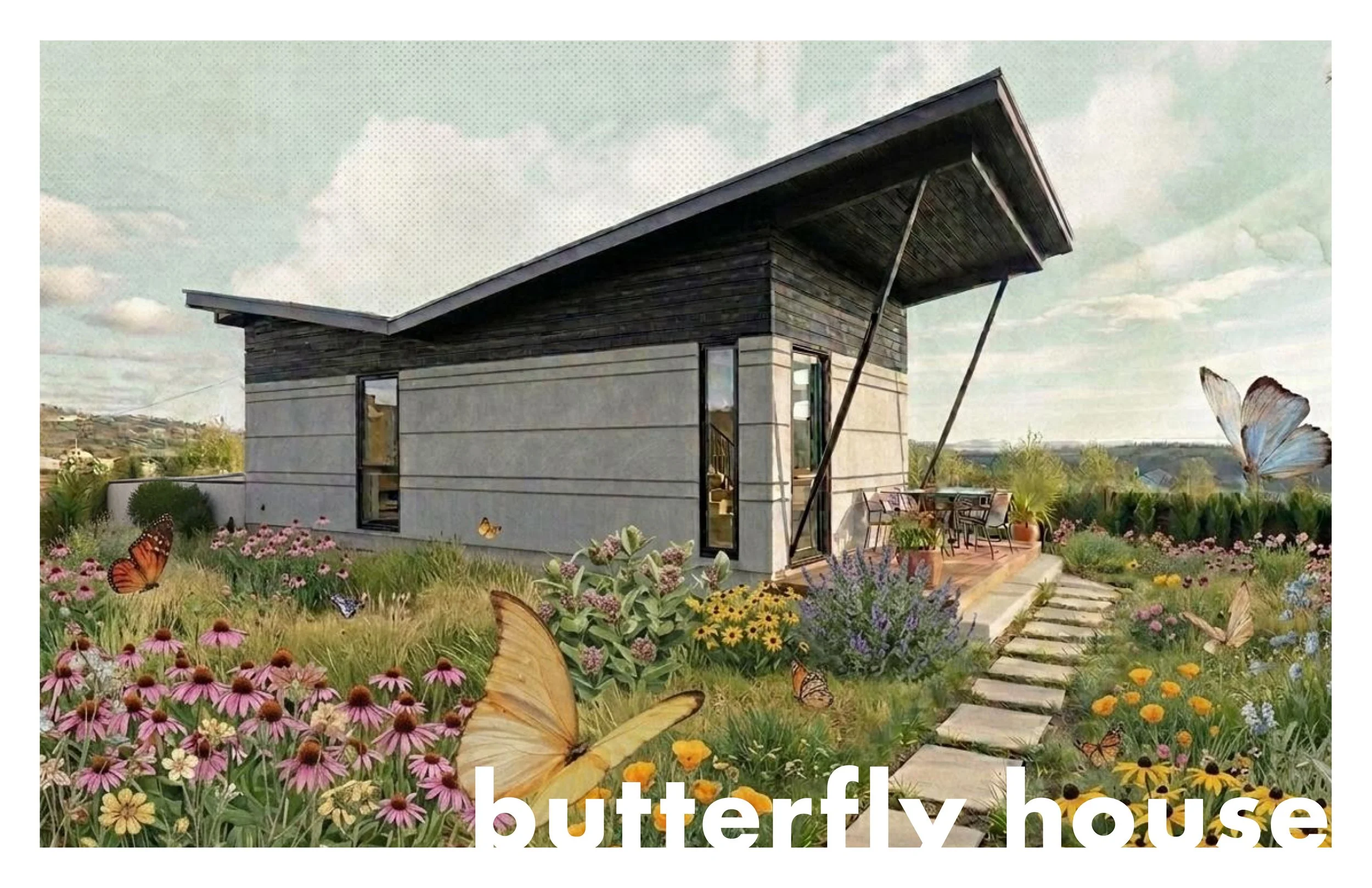
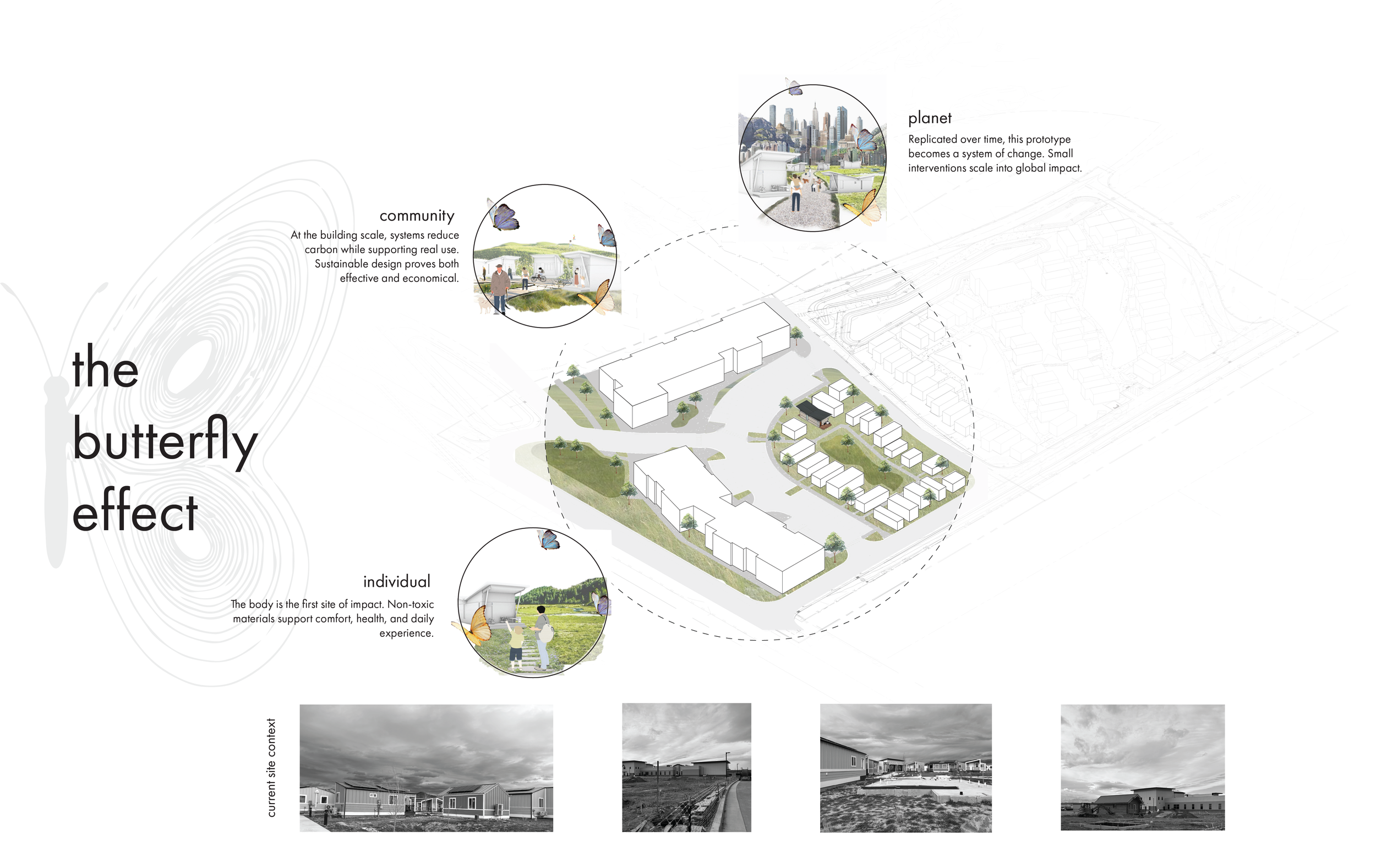
the butterfly house is a rare kind of project. it is not an abstract housing study or a prototype on paper—it is part of a real, growing neighborhood in salt lake city, built for individuals transitioning out of homelessness into long-term, permanent housing. the butterfly house is one of several dwelling types within the village that will help support the broader financial and operational sustainability of the other side village, functioning as short-term airbnb rentals, generating revenue that directly helps fund and sustain the long-term mission of the community.
what makes this recognition especially meaningful is that it affirms a broader idea: that supportive housing can be simultaneously affordable, scalable, environmentally responsible, and materially rich. too often, these priorities are treated as competing forces. this project shows they can reinforce one another when the system is designed holistically from the outset.
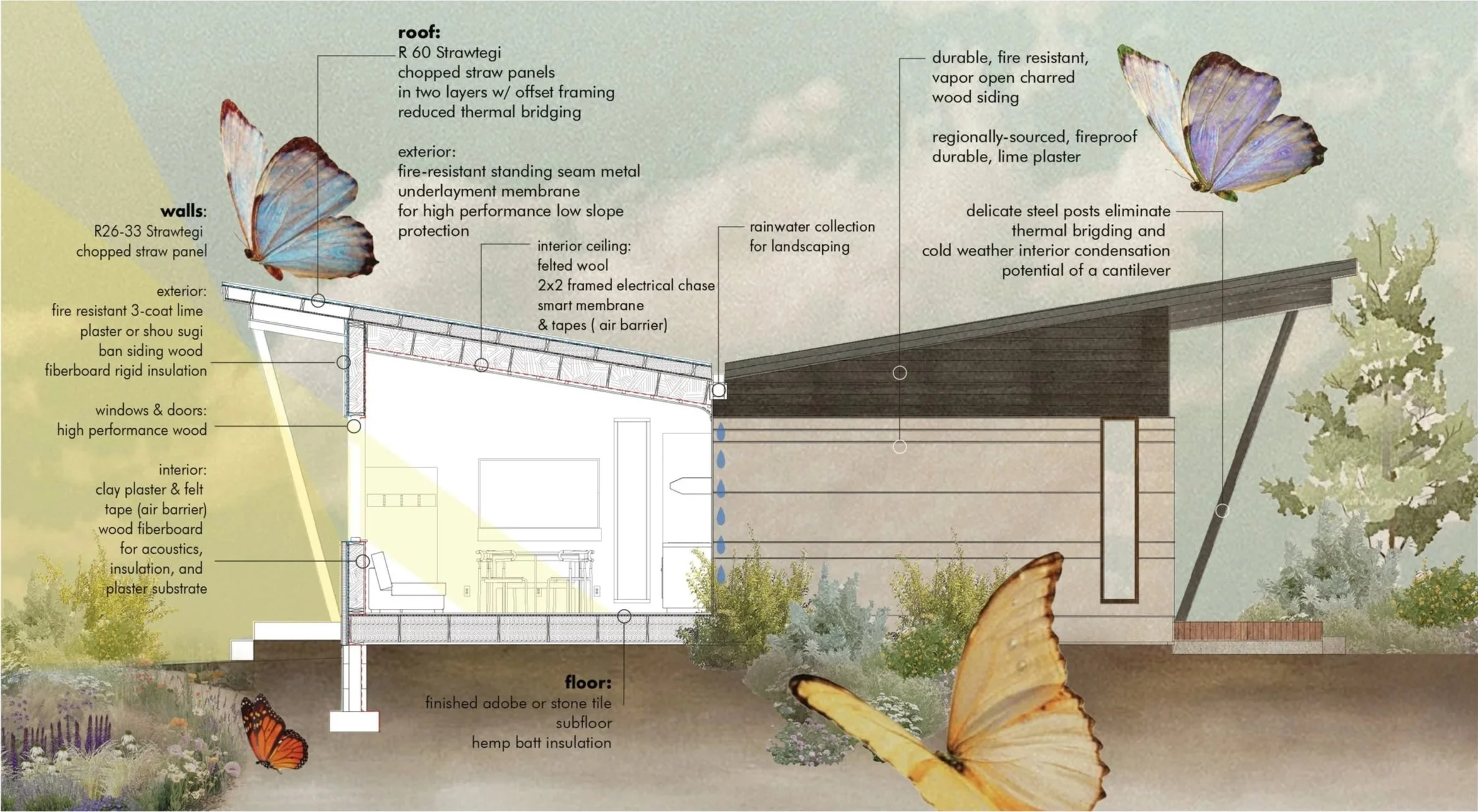
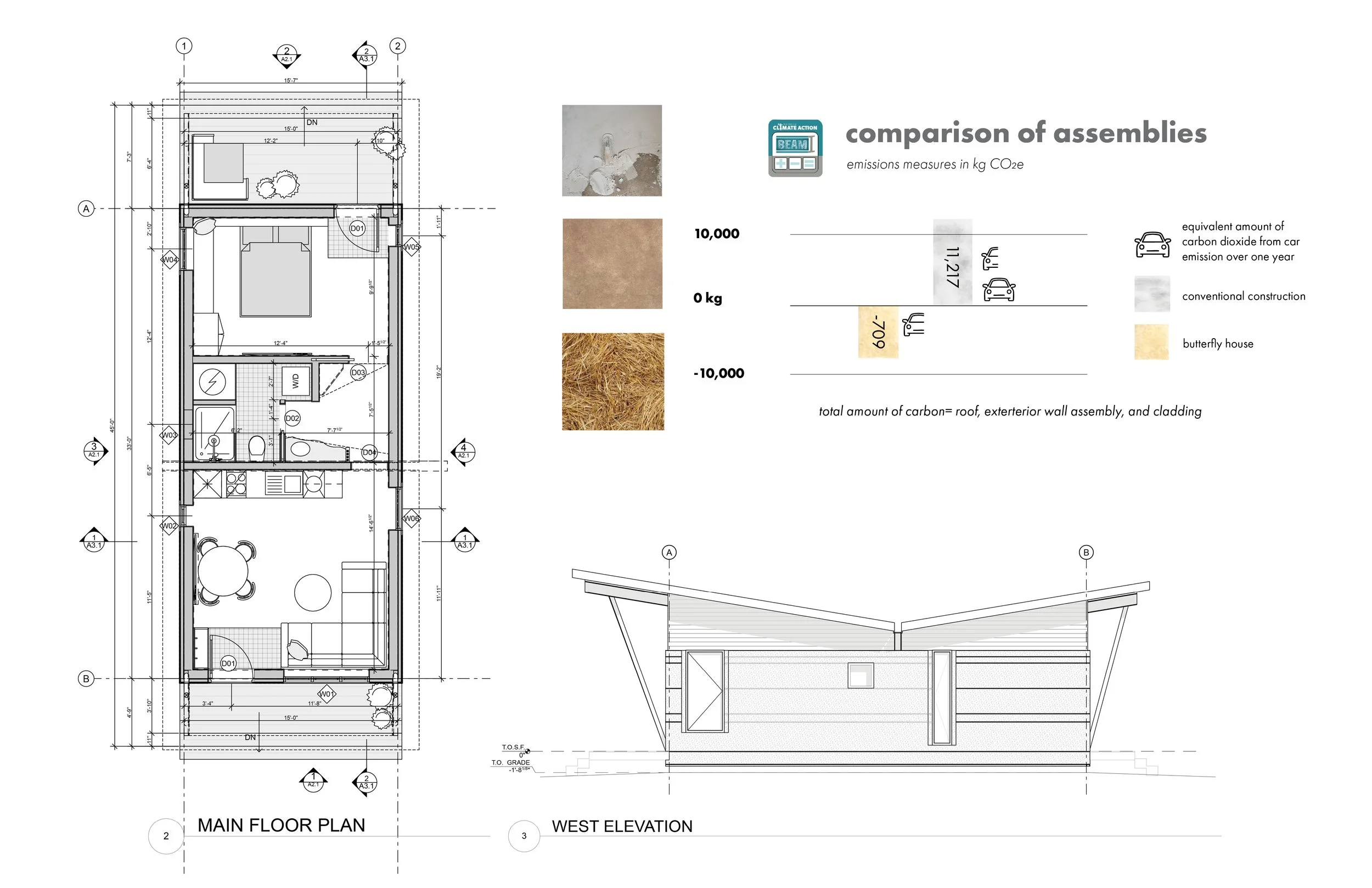
At the heart of the project is a prefabricated straw-panel wall system that combines natural materials with modern building science. By manufacturing panels in controlled environments, density, moisture performance, and thermal efficiency can be carefully managed, resulting in a building system that is durable, energy-efficient, and practical to construct. The assembly stores carbon, reduces reliance on high-embodied-energy materials, and provides excellent thermal and acoustic performance.
A major component of the project will be a series of hands-on workshops and educational events that bring together trade workers, academics, and the other side village workers . Participants will have the opportunity to engage directly with regenerative building materials and techniques—from straw-based wall systems and wood fiber insulation to natural plaster finishes and earthen floors.
These materials are particularly powerful educational tools because they are approachable. Unlike many conventional construction systems, natural plasters and earthen finishes invite participation. People can touch them, shape them, repair them, and understand how they work. Wood fiber insulation is similarly straightforward to install and provides an accessible introduction to high-performance, low-carbon construction. The goal is not simply to teach a building system, but to build confidence, skills, and broader awareness of regenerative construction practices.
Through these workshops, the project becomes a living classroom—one that connects academia with the trades, design professionals with builders, and emerging practitioners with experienced craftspeople. By sharing knowledge openly, we hope to accelerate the adoption of regenerative building methods and strengthen the network of people working to make healthier, lower-carbon buildings possible.
Ultimately, the Butterfly House demonstrates that natural materials and modern construction can coexist. Speed and care can coexist. Scalability and ecological responsibility can coexist.
The AIA grant helps bring visibility to that possibility. It recognizes that innovation in housing is not only about efficiency or density, but about how architecture can actively support human recovery while contributing to ecological repair.
For us, it is a reminder that material choices matter—not only technically, but ethically. When buildings prioritize health, comfort, resilience, and environmental stewardship, they do more than provide shelter. They help create the conditions for people to rebuild their lives.