
Rooted and Resilient: Designing a Natural Home in North Idaho
By Mallory Bermensolo, Meredith Tribble, and Lindsey Love
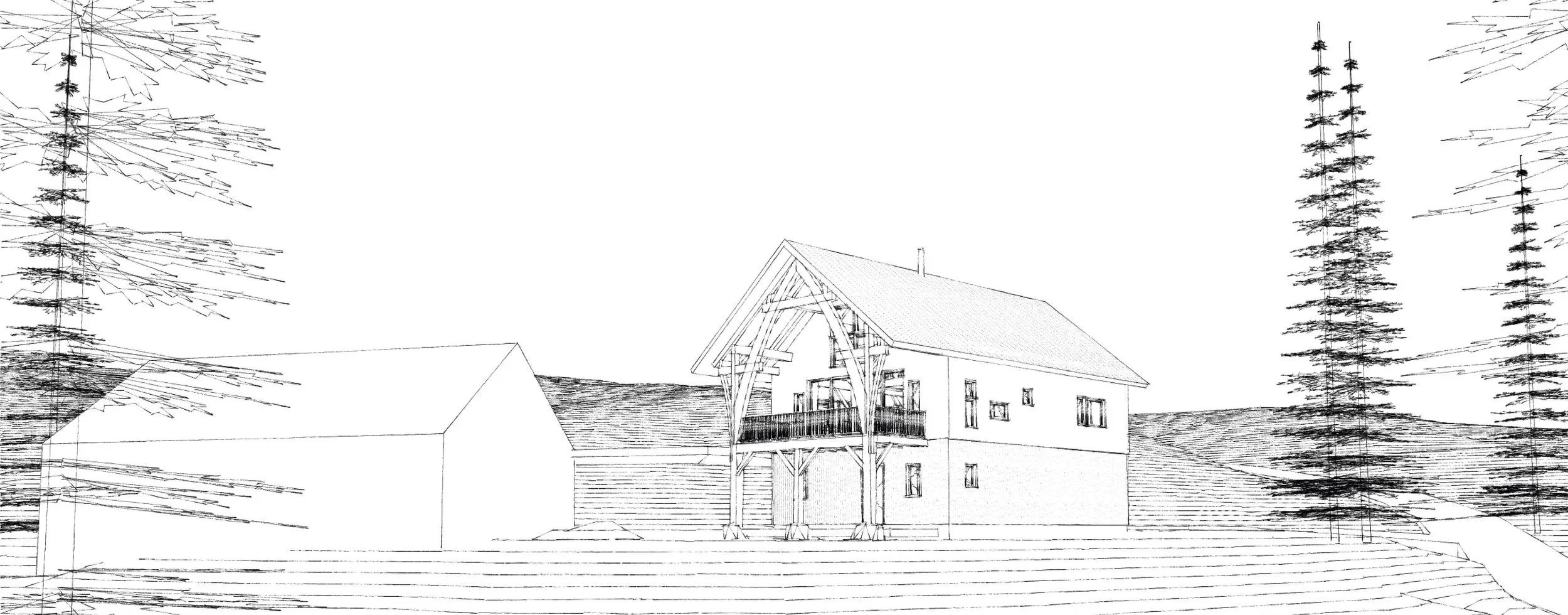
by boden architecture
In the forested foothills north of Bonners Ferry, Idaho, a home is emerging that feels both timeless and forward-looking — a handcrafted timber frame wrapped in straw and plaster walls, designed to endure and belong. More than a house, it’s a family’s experiment in what it means to live lightly and live well, rooted in values of authenticity, craftsmanship, and connection to place.
Designed by Boden Architecture, with Regenerative Building Solutions (RBS) as technical advisor, the project integrates craft timber framing with a high-performance straw panel envelope. RBS supported evaluation of envelope strategies and coordinated components and finishes for long-term performance, durability, and cost alignment.
Grounded in Family and Place
After relocating to northern Idaho to be closer to family, homeowners Kevin and Kathy Lewis set out to build a durable, healthy home utilizing natural materials. The project began when their son-in-law, Phil — a former forester turned timber craftsman — proposed constructing a small garage and ADU on the property. Recognizing broader site potential, Kathy engaged Nathan Cool and the team at Boden Architecture to assess siting, views, solar orientation, and long-term planning opportunities.
“We started with simple diagrams,” Nathan recalls, “studying how to align the home with Parker Peak, optimize passive solar gain, and follow the natural slope of the land.”
What began as a modest outbuilding evolved into a 2,400+ sq ft custom home — with lofts for grandchildren, timber craftsmanship throughout, and a form shaped for comfort, enjoyment of the surrounding forest, and togetherness.
Why Timber Frame and Straw Bale?
For the Lewises, material selection was about more than appearance or trend — it was about embodiment of their values. They sought a quiet, restorative environment built from natural, local, and low-toxicity materials, even if that meant reducing the home’s footprint to stay within budget.
When Kevin suggested exploring straw bale construction, the team saw an opportunity to merge tradition with high-performance building science. RBS was invited to join the team to evaluate potential straw construction systems, comparing properties and characteristics — aligning material choices with performance and purpose.
RBS developed a custom weighted matrix measuring trade-offs across criteria such as:
Fire resistance
Health and material toxicity
Embodied carbon
Cost
Ease of installation
Availability
Electrical/mechanical integration
Complexity of construction


By comparing the various options — including site-built straw infill, double stud walls, and several European and U.S. panel systems — RBS guided the team to a panelized straw solution, offering the best combination of resilience, constructibility, and alignment with client values.
Design and Detailing
Originally planned as a pre-engineered timber frame, the design was revised to a fully custom frame due to cost considerations and the homeowners’ opportunity to engage their family. Drawing on Phil’s timber framing experience, the team designed a home that integrates open living space and cozy nooks. A modern chalet meets Swiss-family Robinson Treehouse.
RBS developed detailing to integrate the straw wall and roof panels with the timber structure, ensuring the envelope performed as a continuous, vapor-open system.
Key strategies included:
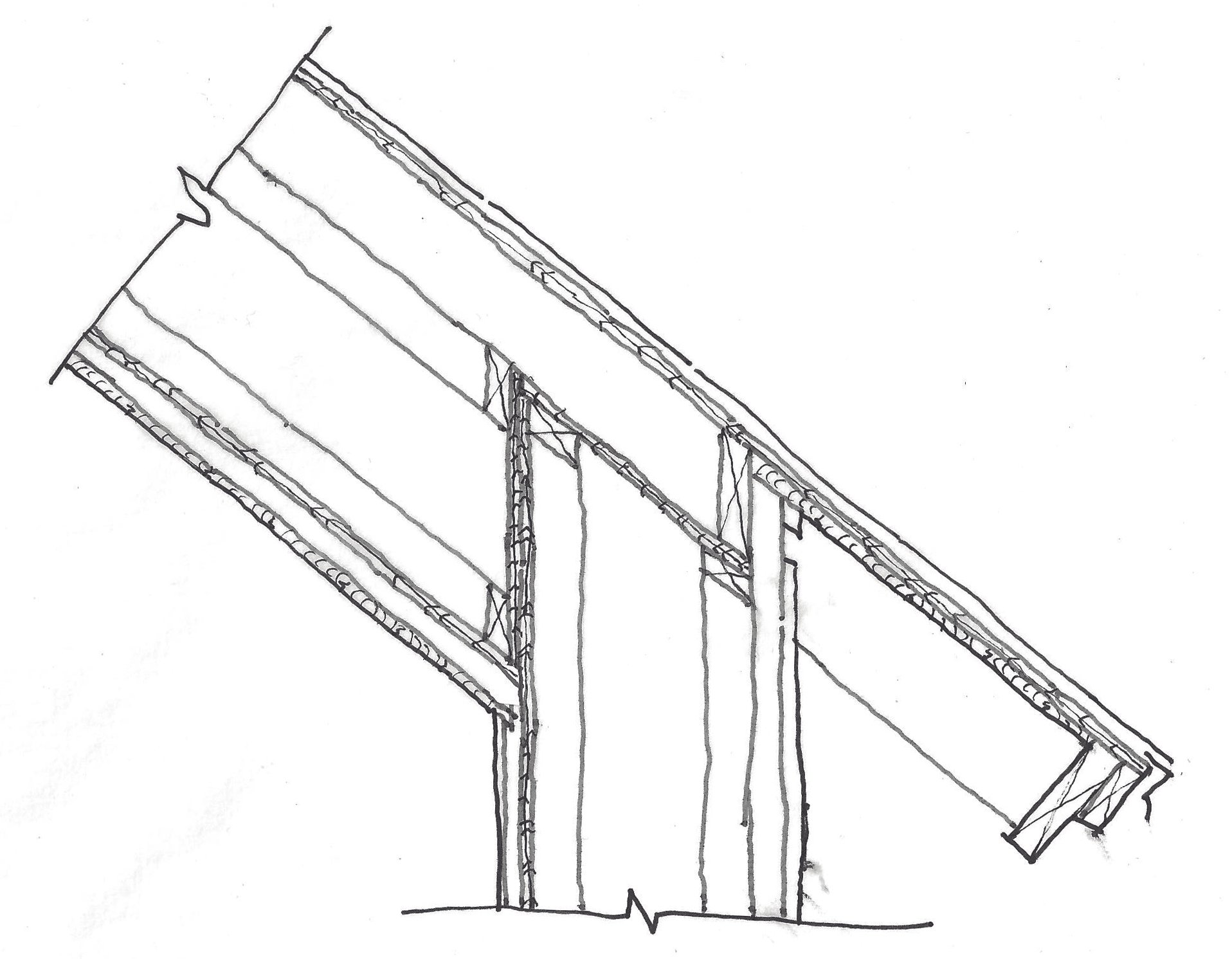
Fire-resistance: compressed straw is highly fire-resistant, but pairing with a lime-stucco finish provides a 1.5-2 hour-rated exterior wall
Moisture Management: consideration of finishes, trim, air-sealing, and weather-resistance
Material and sub-contractor sourcing
Sequencing of component installation and integration
Future maintenance strategies
The result is a vapor-open yet airtight assembly, promoting hygrothermal stability, and passive energy efficiency throughout the year.
Construction Insights
Building in remote Bonners Ferry requires careful coordination. The relaxed permitting environment offers flexibility but the location is also limited in contractors with expertise in straw construction methods.
Highlights:
Custom timber fabrication aligns structural and aesthetic goals
Panelization streamlines construction, eliminates learning curves, and minimizes weather delays
Specialty sub-contractors in the region can fill the gaps for specific scopes of work such as plaster or stucco application
Collaboration between Boden Architecture, RBS, and builder Joel MacIntosh will contribute to systems alignment
Quantifying Performance: A BEAM Carbon Snapshot
To evaluate performance, RBS conducted a BEAM embodied carbon analysis comparing the straw assembly to more conventional ones. The results were striking: traditional materials would potentially generate 12,257 kg CO₂e, or emissions similar to driving TWO vehicles for a year, while the straw panel system actually reduces emissions by 17,539 kg CO₂e, or removing 3.8 cars for a year. The straw walls store more carbon than they emit.
In addition, the panel system, continuous air-sealing, and quality windows and doors allow the home to meet heating targets with a relatively small HVAC system. The residence will operate with a minimum of additional energy inputs.
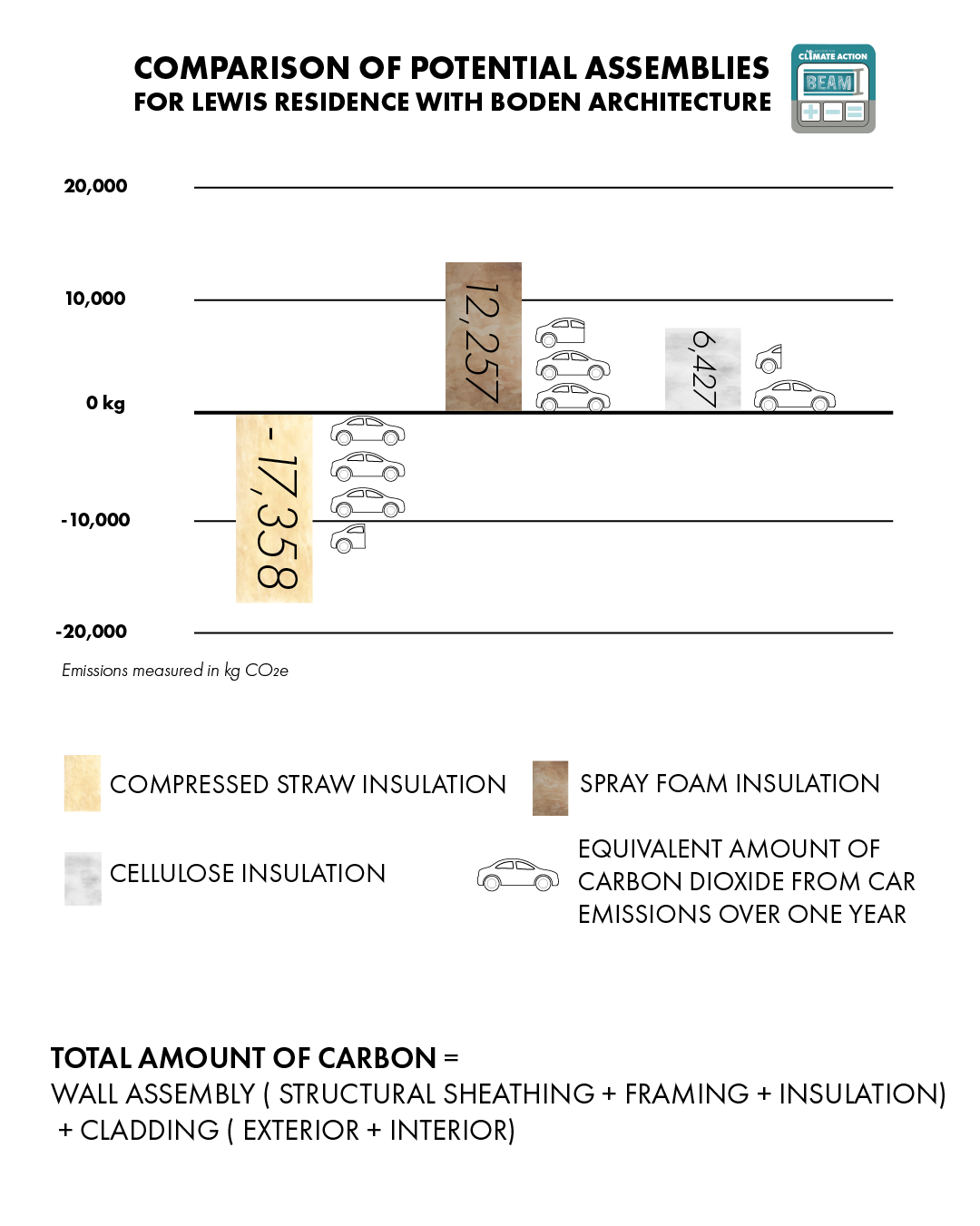
data developed with the Beam tool
Lessons and Reflections
For the team at Boden Architecture, the Lewis Residence highlighted the value of thoughtful collaboration. The homeowners weren’t seeking luxury; they wanted an authentic, functional, and healthy home. Through the combined expertise of RBS, Boden Architecture, Joel MacIntosh, and the broader project team, the vision is becoming reality through innovative solutions and technical depth.
While sourcing local skilled natural plasterers proved to be the most challenging role to fill, our process reinforced that collaboration leads to productive solutions.
Toward a Natural Building Revival
As straw bale and timber construction gain recognition for their environmental and experiential benefits, Idaho stands at the threshold of a natural building revival. Straw walls offer exceptional thermal performance (R35-45), fire-resistance, sound attenuation, and moisture-regulating properties.
Beyond performance, straw and natural plaster systems contribute to a restorative living environment — maintaining clean indoor air, reducing reliance on mechanical systems, avoidance of toxins and mold, and most importantly, re-connect us to nature.
The Lewis Residence demonstrates what’s possible when clients, architects, consultants, and builders collaborate and prioritize values over convention. By combining natural materials, envelope innovation, and site-specific design, this project exemplifies a regenerative approach that balances durability, comfort, and environmental responsibility.